Dragonflies of Malaysia
 |
 |
 |
Exquisite and Plentiful
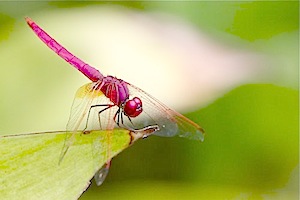
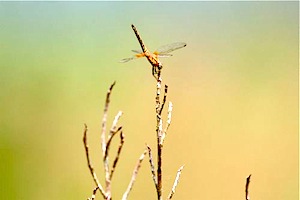
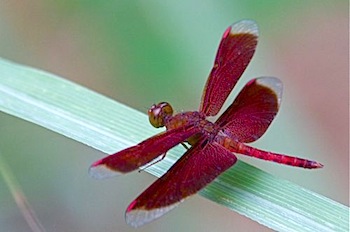
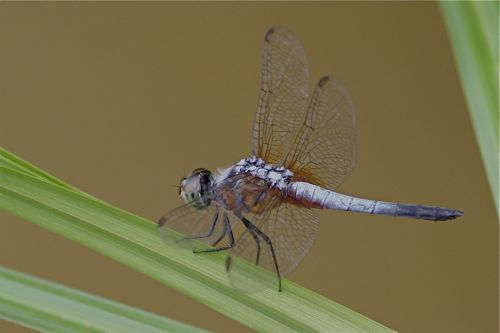
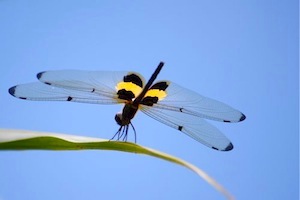
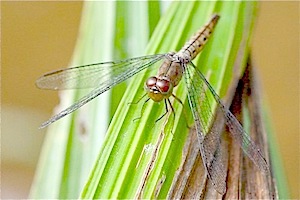
The dragonflies of Malaysia include some of the most exquisite forms found anywhere in the world.
And did you know that with more than 230 species recorded (and with further discoveries for sure), this is about twice the number of species found in Europe?
Really? How so?
Well, probably it is because of the hot and wet equatorial or tropical climate of the country, with streams, rivers and forests galore, that are conducive to the existence of these amazing tiny super-helicopters of the world.
Odonata Order of Insects
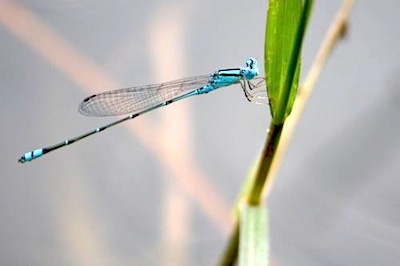 |
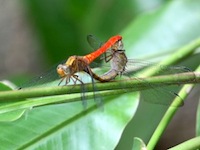
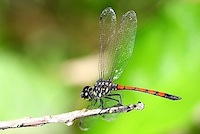
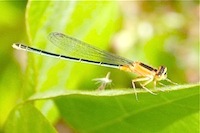
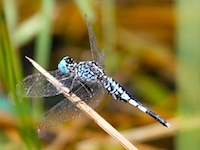
Dragonflies are insects that belong to the order of Odonata (also known as odonates), which is further divided into two sub-orders, namely, Zygoptera (damselflies) and Anisoptera (true dragonflies).
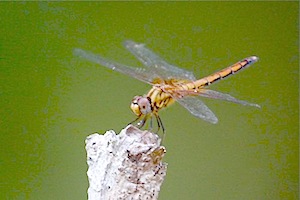
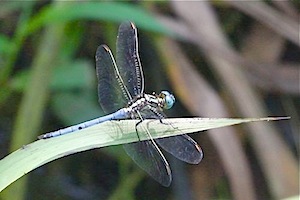
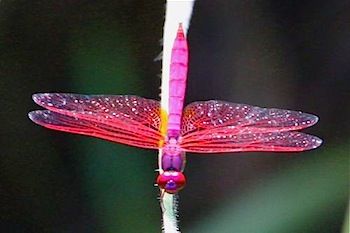
Like butterflies, moths and other insects, while comparatively small, they come in different sizes, shapes and colors.
Different species are distinguished by the differences in the lengths, patterns, colors, shapes and sizes of wings and bodies, and their larvae.
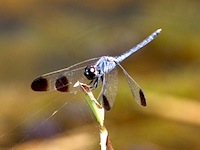
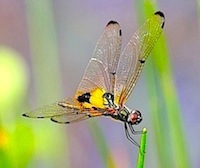
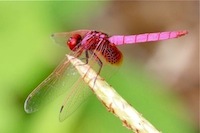
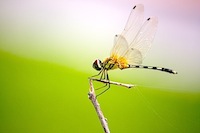
You can find species that have bodies or wings of red, green, blue, yellow, pink or orange, well, possibly the whole spectrum of light colors.
They are, in their own way, really beautiful, fascinating and definitely awe-inspiring creatures of God.
 |
 |
 |
Where can we find the dragonflies of Malaysia?
Well, they are easy to find as they seems to be everywhere.
As mentioned above, Malaysia being a tropical country with voluminous
amounts of water, great diversity of dragonflies (and damselflies) can
be found wherever there is suitable fresh water habitat.
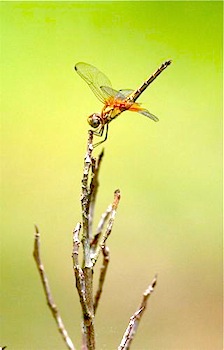 |
They can be found frequenting the edges and borders of ponds, lakes, streams and rivers in the country.
Even in murky or brackish blackwaters and swampy and coastal areas of the country, there are many species of them living in the habitat of their choice.
And surprisingly, a few species can be found breeding in the cavities of rain-filled tree trunks deep in the forests!!
In the towns and urban areas, besides the city gardens and botanic parks, they can also be seen lurking near open drains, water seepages and small pools of water.
 |
 |
 |
Wonders of Dragonflies
Have you ever observed this insect?
You will surely notice that it is truly an amazing piece of God's creation.
For instance, its eye is considered as the most complicated insect eye structure in the world.
Each eye has around thirty thousand lenses, and being semi-spherical covering both sides of the head, the dragonfly has an extraordinarily wide visual field, enabling it to see both in-front and back.
That's why when we walk or go near this living "helicopter" from any direction, it will fly away because it can see us coming. We need to go slowly, quietly and stealthily if we really want to get near any dragonfly.
And well, of course, another wonder of dragonflies is their superb flight and manoeuvering abilities. This, no doubt, must have been the inspiration and model behind mankind's design of helicopters, a sophisticated piece of technology that can ascend and descend without needing a long runway.
Observe that, while flying at whatever speed, it can suddenly change direction, and can make itself remain suspended and hanging in the air, which is usually when it is hunting for preys. They eat other small insects for food.
It has a fast acceleration speed, said to be equivalent to an athlete running the 100 meters at more than 24 miles per hour (or about 39 kilometers per hour).
Get their best prices HERE!
|
Enjoy the beautiful dragonflies and damselflies of Malaysia.
Well, enough chatter about the wonders of dragonflies.
There are more to be said about their complex body structure. But for now let's just observe and be delightfully amazed by them.
Visit this Malaysian dragonflies and damselflies gallery for pictures of some species of this wonderful insect.
Do take care of our environment, and don't forget to check the various colors, shapes and beauty of these tiny beauties.
Enjoy.

|

|
Home › Dragonflies of Malaysia